
My story
My life with spherocytosis
I have been living with this disease for almost 34 years…
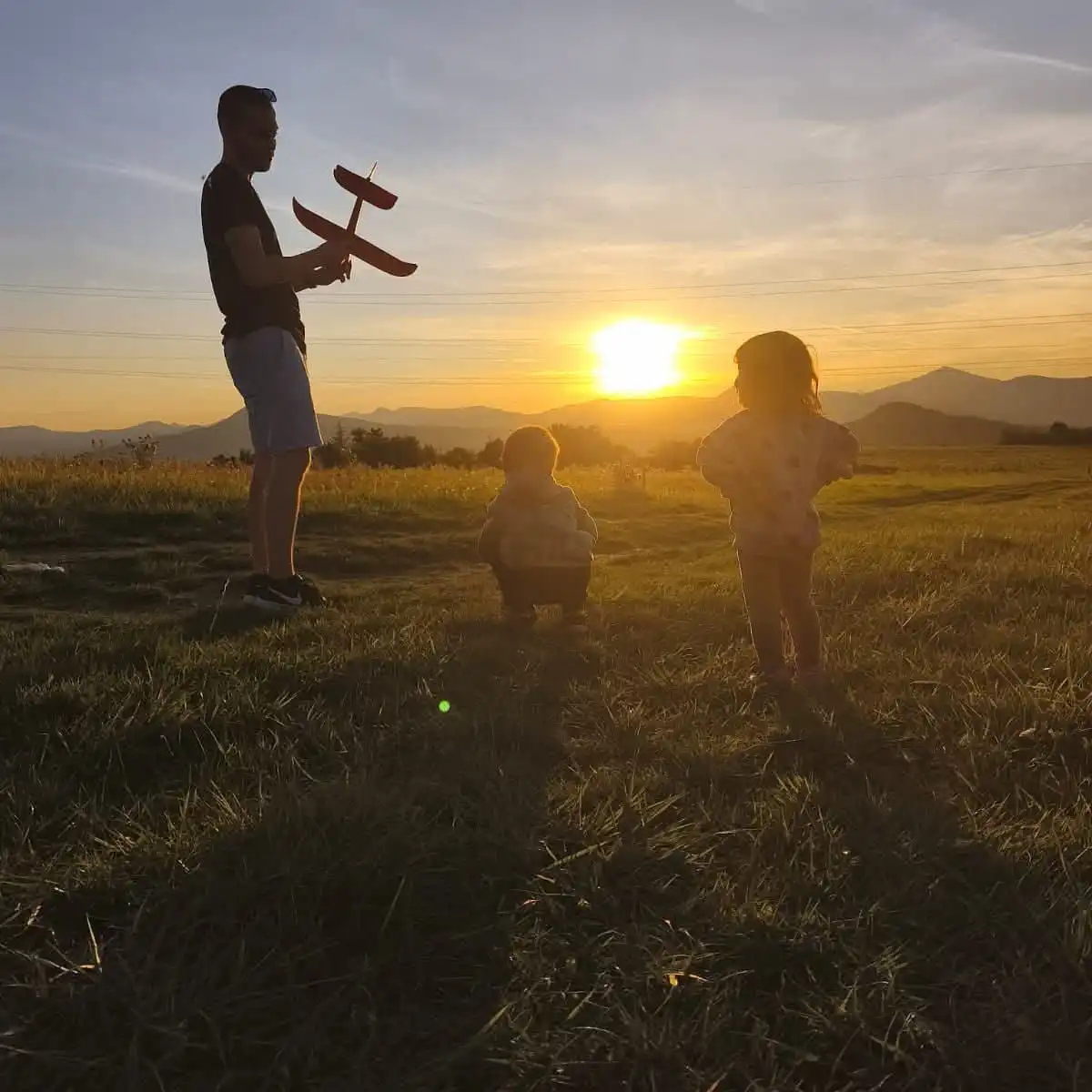
The author of this page is a young man who was born in 1992. At 14 days of his life, he was very yellow and cried a lot. After various tests, during which, among other things, congenital spherocytic hemolytic anemia, or spherocytosis, was also recorded.
How did the disease actually affect my childhood and life?
Actually, quite a lot. Like every child, before his immunity is "beaten down", I was often sick. Unlike my friends, however, I dealt with most illnesses for twice as long. The body of a small, but also a large person with spherocytosis is simply less resistant to infections, both viral and especially bacterial - and it is noticeable. So as a small child, I often suffered from various respiratory diseases. Each such illness was often accompanied by great fatigue and noticeable yellowing, especially of the whites of the eyes and around the eyes. More than once, people and children in kindergarten/school were afraid of me or mocked me because I looked like I had jaundice. Very often, such an illness developed to the point where hospitalization and supportive treatment in the form of antibiotics were necessary. So childhood is largely associated with memories, especially of the hospital environment. Only once in my life so far has a hemolytic crisis erupted, and that was when I was 9 years old. Hospitalization and red blood cell transfusion followed. Improvement came relatively quickly, I think by the second day - I still remember that relief today. As a result of this crisis, the very next year my parents decided, of course under the guidance of excellent doctors at Motol Hospital in Prague, that it would be best to continue with treatment in the form of a splenectomy. I underwent the surgery, and yes, it was the most painful thing I have ever experienced. Fresh from the surgery, I felt pain that cannot be compared to anything. Under that 14 cm scar, you can tell that “something happened”. Neither the morphine nor the opiates administered could completely cover the pain. Of course, there was prophylactic administration of antibiotics (which continued for the next 10 years until I arbitrarily decided to stop taking them.) The convalescence lasted I think 3 months, after which time I went to school and continued my studies, despite the absence I was doing well in school with honors.
However, now I no longer had to worry so much when playing football that someone would hit me in the stomach and my spleen would burst, now I felt freer in sports, and in every movement that I have loved all my life. However, the restrictions continued, for example, I was never allowed to play football at a “professional” level for fear of being physically unwell. As for physical skills, endurance and stamina, spherocytosis did not limit me in this respect (which can of course be influenced by genes, activity and physical talent of each person). However, I definitely did not lose out among my peers in terms of sports performance, on the contrary, I often surpassed them in my performances. I was all the more sorry that a professional football career was not recommended and was basically forbidden for me.
So it can be said that spherocytosis, probably like other diseases, certainly had a negative impact on my psychological well-being throughout my entire life, both as a little boy who simply wanted to play and have fun with children, but had to be careful of kicks in the stomach, and also during my adult life, when I was often knocked out by infections, more often than other people. I was often separated from my friends, or I did not participate in some activities or trips due to chronic respiratory diseases, and I am also often separated from my friends or acquaintances in the case of other activities, because I have to save energy primarily to ensure my family and their happiness. As another manifestation outside of the spleen, I was also limited by gallstones, which are formed as a result of increased bilirubin (bile pigment), which is basically waste from the breakdown of red blood cells. I did not know about them for most of my life, until around the age of 24 I started to feel pain when consuming certain foods and poor-quality coffee from a vending machine (which I took, among other things, as an indicator of the quality of food or drink we get into ourselves). So I decided to have my gallbladder removed in 2016 and since then I have basically been at peace. The only thing left is occasional diarrhea when consuming, for example, grilled or other fatty unhealthy foods, but you can live with that.
As important as everything is - the mindset.
As I have already written, I was often limited by my illness, but what I consider to be key - I never gave up the opportunity to try what I was capable of and what my body could do. Whether it was playing football at least recreationally, I always rode a bike, tried to run with my friends outside, whatever seasonal illnesses allowed me. As I have already mentioned, after splenectomy I used Penclen (a penicillin antibiotic) as a preventative measure. Every morning, every evening. I used antibiotics in this regimen for 10 years after my surgery. During my adolescence, when I was 19 years old, It seemed like a bad idea to take alcohol with antibiotics, I stopped taking antibiotics. You may think it was a bad idea, but I consider it one of the best decisions I have ever made. (I don't mean drinking alcohol.) I can't say that I would have gotten sick more often. Maybe shortly after stopping taking them, for 1-2 years I had more frequent colds. But I also gave my body the opportunity to defend itself, using its own resources. And I'm glad I did it and my body got used to it again.
Of course - if I am now being treated for a more serious cold, the doctor will prescribe antibiotics for me, just like other people. However, I don't take them long-term and preventively, like before. What doctors recommend to everyone who has spherocytosis is to definitely always have one box of "emergency" antibiotics at home, in case something breaks out. Which leads me to the idea - my doctor recommended that I take antibiotics preventively whenever my body temperature exceeds 37.5 degrees during an illness. However, if I were to always follow this rule, I would take antibiotics much more often than I actually have to. I usually let my body defend itself - if I think the situation is not improving, I immediately consult a doctor and start taking antibiotics - and I have already used my emergency antibiotics once, when after two days my temperature did not drop below 39 degrees Celsius and I was unable to see a doctor. And also, what Dr. Vávra at Motol Hematology always told me - whenever I see a doctor, I always have to report in advance that I have spherocytosis. And based on that, doctors then choose the appropriate procedure, such as for wisdom teeth extraction, to ensure antibiotics just in case.
Of course - if I am now being treated for a more serious cold, the doctor will prescribe antibiotics for me, just like other people. However, I don't take them long-term and preventively, like before. What doctors recommend to everyone who has spherocytosis is to definitely always have one box of "emergency" antibiotics at home, in case something breaks out. Which leads me to the idea - my doctor recommended that I take antibiotics preventively whenever my body temperature exceeds 37.5 degrees during an illness. However, if I were to always follow this rule, I would take antibiotics much more often than I actually have to. I usually let my body defend itself - if I think the situation is not improving, I immediately consult a doctor and start taking antibiotics - and I have already used my emergency antibiotics once, when after two days my temperature did not drop below 39 degrees Celsius and I was unable to see a doctor. And also, what Dr. Vávra at Motol Hematology always told me - whenever I see a doctor, I always have to report in advance that I have spherocytosis. And based on that, doctors then choose the appropriate procedure, such as for wisdom teeth extraction, to ensure antibiotics just in case.
Should my illness limit me?
I have been asking myself this question my whole life. It is a lot about working with my mindset and how I let myself be limited. I have always tried to limit my life as little as possible with this illness. As a child, of course, I could not influence the physical limitations and absences due to frequent illnesses. However, in adolescence and adulthood, I already had other options for how to deal with it and the decision about that was solely up to me. So I decided not to use the disability pension option at the beginning of adulthood and would rather try on my own. I graduated from high school, applied to university, but I didn't finish it, but for other reasons, spherocytosis really wasn't to blame. Then I applied to various job openings in the IT sector and after one of them I successfully got a job. Working in the capital, in the very center, near Wenceslas Square. Multiple trips every day using the most frequent public transport in the country. Metro, trams, buses. For a person with such a disease, perhaps an unfortunate choice. I won't lie, for the first few years I had a cold at least once a month, or I felt like my body was fighting something. But as time went on, it wasn't once a month anymore, but maybe every other month. Over time, after 2-5 years, wonder what happened, I was sick maybe two to four times a year. Which, I think, can be considered a normal value even for a fairly healthy person. Although I stopped taking antibiotics, I never restricted myself in any way in my “nightlife” or particularly rested, the body somehow managed the adaptation. We tried to continue in this regime, although I am still cautious and try to avoid direct contact with someone who obviously has a cold, I still function in a similar way today. After some time, I exchanged my job in the capital for a quieter job in a smaller town, for a change in a hospital environment, where illnesses are also not far away. I have already taken several of them home, including COVID19. However, I have been working here for the third year, I get sick 2-3 times a year, and about 5-8 times a year I feel like something is crawling on me, but my body will deal with it. Now, two small children who go to kindergarten and work in a collective, and their immune system is also only just forming, do not add much to it. With young children in kindergarten, I am sick about 6 times between autumn and spring. My recovery from any illness takes twice as long as that of my healthy wife or children who are not burdened with any chronic illness..
So what would I advise a person who has to live their life with spherocytosis?
Of course, caution comes first. Monitoring by a hematologist, frequent check-ups in childhood and greater caution of the child when playing, beware of the possibility of an enlarged spleen, in the event of an unfortunate blow to the abdomen, it could rupture and this could have fatal consequences. In the case of an enlarged spleen, splenectomy should come next, which I also underwent. It is the only - and good - solution. Be careful of great fatigue or yellowing of the whites of the eyes and the area around the eyes, this means that the body is fighting something and you need to be careful. Vaccinations are important after a splenectomy - pneumococcus, meningococcus, streptococcus, staphylococcus, haemophilus. Prophylaxis after splenectomy with antibiotics and their use. Personally, as I have already mentioned, I stopped taking them 10 years after the splenectomy at the age of 19. But I think that I helped that body rather than harmed it.
And what above all? Consider carefully how I feel, if I feel like I can do sports or do some activity, then go for it. Personally, I do sports as much as I can, what my body allows. Bike, exercises with my own weight, and previously even the gym. Yes, sometimes I feel that I don't have the strength and I have to skip exercise or other fun (going out with friends), but other times I make up for it and I keep trying to push my "limits". First of all to think in the sense of how not to let the disease paralyze you, but how to make the most of the cup that I was given, even though that cup may be smaller than others have. I think that is the key to how to live life with a disease, whether it is spherocytosis or any other.
And what above all? Consider carefully how I feel, if I feel like I can do sports or do some activity, then go for it. Personally, I do sports as much as I can, what my body allows. Bike, exercises with my own weight, and previously even the gym. Yes, sometimes I feel that I don't have the strength and I have to skip exercise or other fun (going out with friends), but other times I make up for it and I keep trying to push my "limits". First of all to think in the sense of how not to let the disease paralyze you, but how to make the most of the cup that I was given, even though that cup may be smaller than others have. I think that is the key to how to live life with a disease, whether it is spherocytosis or any other.
If you've read this far, thank you for your attention and I wish you only the best in life! :)
If you would like to read more about my life, or about spherocytosis, you can HERE in the BLOG.
If you find the information helpful, you can support the project with a voluntary donation.